
- Comments (0)
- By PAUL P. JOHN
- August 22, 2026
- Total Reads: 29,127
Soil Minerals & Biological Stress: Why Modern Resilience Begins in Topsoil.
Today’s younger generation is often labeled as fragile or lacking stress tolerance. But biologically, is this a behavioral flaw or a chemical deficiency?
Science points to a fundamental reality: Stress tolerance in living organisms—from plants to humans—is directly governed by mineral status. When soil loses its mineral intelligence, crops become weak, and the humans who consume them lose their biological capacity to manage stress.
1. The Plant Stress Mechanism: Soil Minerals as the First Shield In plant physiology, a mineral-rich plant can easily withstand environmental stressors like severe drought, extreme flooding, or pest attacks.
The Mineral Defense Network: Essential micro-minerals (Zinc, Magnesium, Calcium, Boron) act as co-factors for plant enzymes. They strengthen cell walls and regulate osmotic pressure during water stress.
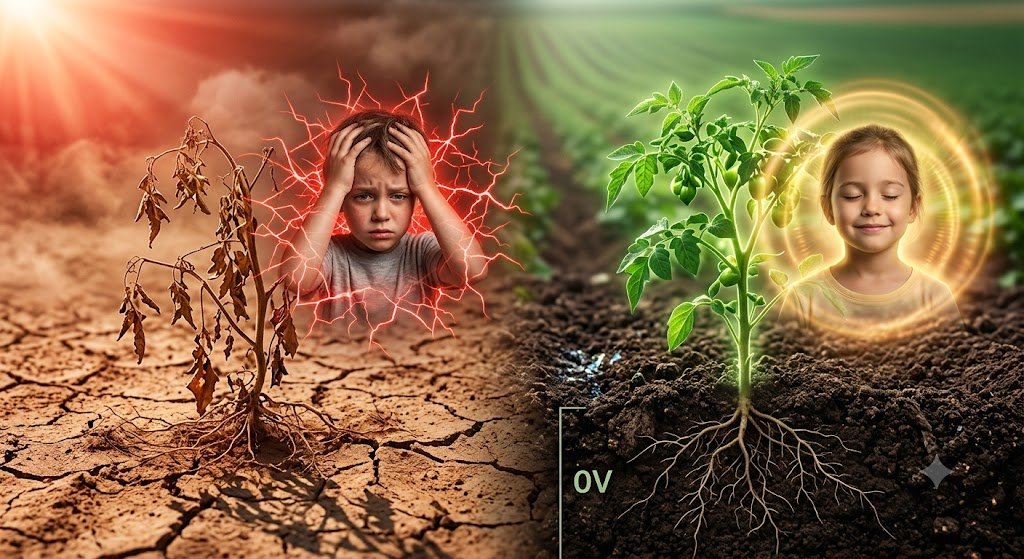
Depleted Soil, Vulnerable Crops: When synthetic NPK fertilizers strip topsoil of trace minerals, plants lose their internal buffering capacity (0V biological voltage). A minor drought destroys them because their mineral status is depleted.
2. Human Stress & The Missing Mineral Matrix
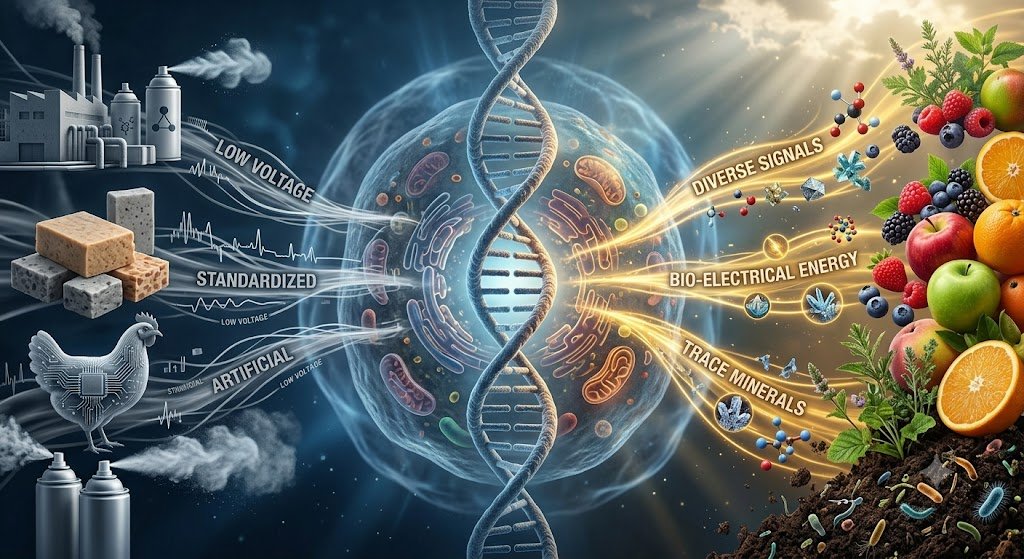
Humans absorb biological data directly from the food chain. When children eat food grown in mineral-starved soil, their nervous system is deprived of the core elements required for emotional and neurological resilience.
Magnesium & The Nervous System: Magnesium is nature’s anti-stress mineral, regulating the HPA axis (the body’s stress response system). Soil depletion has reduced magnesium levels in modern produce, leaving children prone to anxiety, mood volatility, and low stress tolerance.
Zinc & Neurotransmitter Balance: Zinc is crucial for GABA synthesis—the brain's primary calming neurotransmitter. Without soil-derived zinc, the nervous system remains in a perpetual state of hyper-arousal.
Cellular Buffering: Just as minerals protect a plant from drought, adequate biological minerals cushion human cells against systemic inflammation and environmental friction.
3. Rebuilding Stress Resilience from the Ground Up
We cannot expect children to build emotional resilience when their cellular biology is starving for trace minerals.
Regenerate Topsoil Microbes: Healthy soil fungi (Mycorrhizae) solubilize locked minerals, making them bio-available to plant roots.
Restore Trace Minerals: Shift from synthetic chemical inputs to regenerative soil building, ensuring crops inherit full mineral spectrums.
Feed Real Biological Data: Supplying mineral-dense, regeneratively grown produce restores the natural nervous system balance in both adults and children.
"A plant without minerals collapses under drought; a child without minerals collapses under stress. True resilience is not just taught—it is grown in living soil." — Paul P. John ,founder ywol movement.